
- 6
- 6
- 7
- 5
- Jan
- Feb
- Mar
- Apr
- May
- Jun
- Jul
- Aug
- Sep
- Oct
- Nov
- Dec
- Jan
- Feb
- Mar
- Apr
- May
- Jun
- Jul
- Aug
- Sep
- Oct
- Nov
- Dec
- Jan
- Feb
- Mar
- Apr
- May
- Jun
- Jul
- Aug
- Sep
- Oct
- Nov
- Dec
- Jan
- Feb
- Mar
- Apr
- May
- Jun
- Jul
- Aug
- Sep
- Oct
- Nov
- Dec
- Jan
- Feb
- Mar
- Apr
- May
- Jun
- Jul
- Aug
- Sep
- Oct
- Nov
- Dec
The Serengeti National Park is one of the most famous and revered wildlife sanctuaries in the world, located in the northern part of Tanzania, East Africa. It’s a vast, pristine wilderness renowned for its breathtaking landscapes, diverse ecosystems, and rich biodiversity. Here’s a detailed overview of the Serengeti National Park:

Location: The Serengeti is located in northern Tanzania, extending into southwestern Kenya. It covers an area of approximately 14,750 square kilometers (5,700 square miles).
UNESCO World Heritage Site: Serengeti is a UNESCO World Heritage site due to its extraordinary biodiversity and significance in preserving wildlife.
Ecosystems: The park features a variety of ecosystems, including grasslands, woodlands, riverine forests, and savannas. The landscape is dotted with rocky outcrops, such as the famous Seronera area, and it also features the Grumeti and Mara Rivers.

Serengeti is home to an incredible diversity of animals, making it one of the most sought-after safari destinations in the world. Its ecosystems support thousands of species, from large mammals to rare birds and reptiles.
The “Big 5”: The park is renowned for its population of the “Big 5” (lion, leopard, elephant, buffalo, and rhinoceros). These animals can be spotted throughout the Serengeti, especially on safari in the central and western regions.
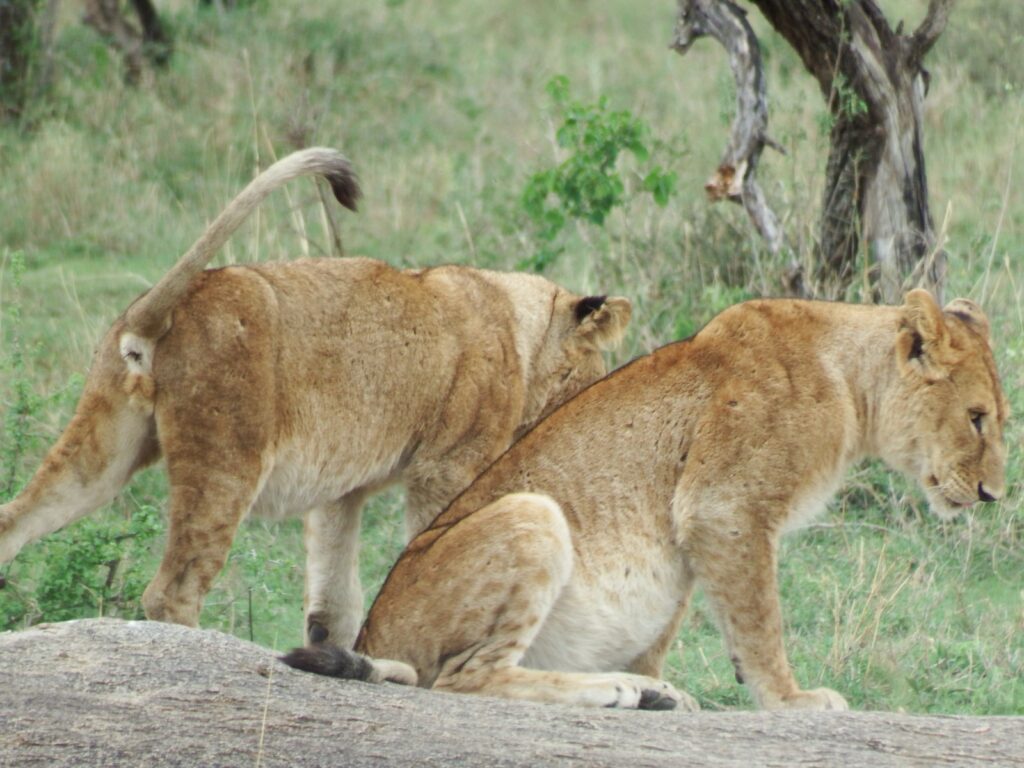
Lions: Serengeti is home to a large population of lions, particularly in areas like Seronera, where these majestic predators can often be seen lounging or hunting.
Leopards: Leopards are elusive and typically reside in the park’s woodlands, where they are often spotted on the hunt or resting in trees.
Elephants: The park boasts large herds of elephants, which are seen in the central and southern parts of the Serengeti.
Buffaloes: These large herbivores can be found in great numbers in the park, often seen grazing in the savannas.
Rhinoceros: While rare, black rhinos are found in the Serengeti, although they are harder to spot due to their more secluded habits.
Migration: Serengeti is famously known for the Great Wildebeest Migration, one of the most spectacular wildlife events in the world. Over 1.5 million wildebeests, along with zebras, gazelles, and other herbivores, move across the plains in a cycle of migration driven by the search for fresh grazing. This migration is punctuated by dramatic river crossings, where predators like crocodiles and lions take advantage of vulnerable animals.
Timing: The migration occurs year-round, but its timing and exact location vary based on rainfall patterns. The best time to witness the river crossings is generally from July to October, when the wildebeests cross the Mara River.
Predators: The Serengeti is also home to a wide variety of carnivores. Apart from lions, leopards, and cheetahs, the park also houses hyenas, jackals, and wild dogs.
Cheetahs: Serengeti is one of the best places in Africa to see cheetahs. The park’s wide-open plains are perfect for these high-speed hunters, who can often be seen chasing prey at incredible speeds.
Hyenas: Known for their social structure and scavenging habits, hyenas are commonly seen in the Serengeti, often in large clans.
Birdlife: Over 500 bird species inhabit Serengeti, making it a haven for birdwatching enthusiasts. From vibrant flamingos that inhabit the park’s soda lakes to majestic raptors like the bateleur eagle, the park is a birding paradise.
Flamingos: Lake Ndutu and other smaller lakes in the park attract thousands of flamingos, especially during the dry season when they congregate to feed on algae.
Vultures: Several species of vultures are found in the Serengeti, including the endangered white-backed vulture.
Reptiles and Amphibians: The Serengeti also hosts a variety of reptiles, such as Nile crocodiles (especially in the Grumeti and Mara rivers), pythons, and monitor lizards. Various frogs and toads are found, particularly in the wet season, when they emerge from their burrows.
Seronera: The Seronera River is one of the park’s most famous areas, attracting large populations of predators and herbivores. The river is a lifeline, providing water to the animals during the dry season.
Ngare Nanyuki River: A permanent river that flows through the Serengeti, it sustains the wildlife year-round and is a popular drinking spot for animals.
Mara River: Located in the northern Serengeti, this river is the site of the dramatic river crossings during the Great Migration, where wildebeests and zebras cross in large herds while trying to avoid crocodiles.
Western Corridor: This area is characterized by lush forests and the Grumeti River. It’s known for its large crocodiles and excellent predator sightings.
Southern Serengeti Plains: Known for vast, open grasslands, this area is the heart of the Serengeti, where thousands of wildebeest and gazelles graze, and predators lurk in the tall grass.
Conservation Efforts
Serengeti Ecosystem: The Serengeti is part of a larger ecosystem that includes the Masai Mara in Kenya. Its management ensures that wildlife can move freely between the two parks, preserving migratory routes and genetic diversity.
Anti-Poaching Measures: Various conservation organizations and park authorities have implemented anti-poaching efforts to protect the wildlife. These efforts include the use of advanced surveillance technologies, ranger patrols, and community-based conservation.
Tourism: Sustainable tourism plays an important role in supporting conservation efforts. Entrance fees and tourist revenues are reinvested in maintaining the park’s infrastructure and supporting local communities.
Tourism and Activities
Safari Experiences: Serengeti is one of the most famous places for safari tourism in the world. Visitors can choose from guided game drives, walking safaris, or hot air balloon safaris for a unique perspective of the park.
Hot Air Balloon Safaris: These are popular for giving a bird’s-eye view of the vast savannah and its wildlife. Balloon safaris typically end with a champagne breakfast in the wilderness.
Cultural Visits: There are also opportunities to visit nearby Maasai villages, where tourists can learn about the Maasai people’s traditions, customs, and lifestyle, and their relationship with the wildlife.
Accommodation: Serengeti offers a wide range of accommodations, including luxury lodges, tented camps, and budget options. For those seeking a more immersive experience, there are also mobile camps that follow the migration.
Dry Season (June to October) : This is the best time for wildlife viewing, as animals tend to congregate around water sources, making it easier to spot them. This is also when the Great Migration river crossings are most dramatic.
Wet Season (November to May): The wet season brings lush green landscapes and fewer tourists, which makes it a great time for birdwatching and photography. The migration is also less predictable during this time, but the calving season of wildebeest occurs in the southern plains around January and February.
The Serengeti National Park is truly a world-renowned destination for nature lovers, wildlife enthusiasts, and photographers. Its rich history, diverse wildlife, stunning landscapes, and cultural significance make it one of the most iconic and treasured natural places on Earth. Whether you’re witnessing the Great Migration, tracking predators, or simply soaking in the panoramic views, a visit to the Serengeti is an unforgettable experience.